Rules of Origin Explained: How UK–EU Goods Can Qualify for Zero Tariffs

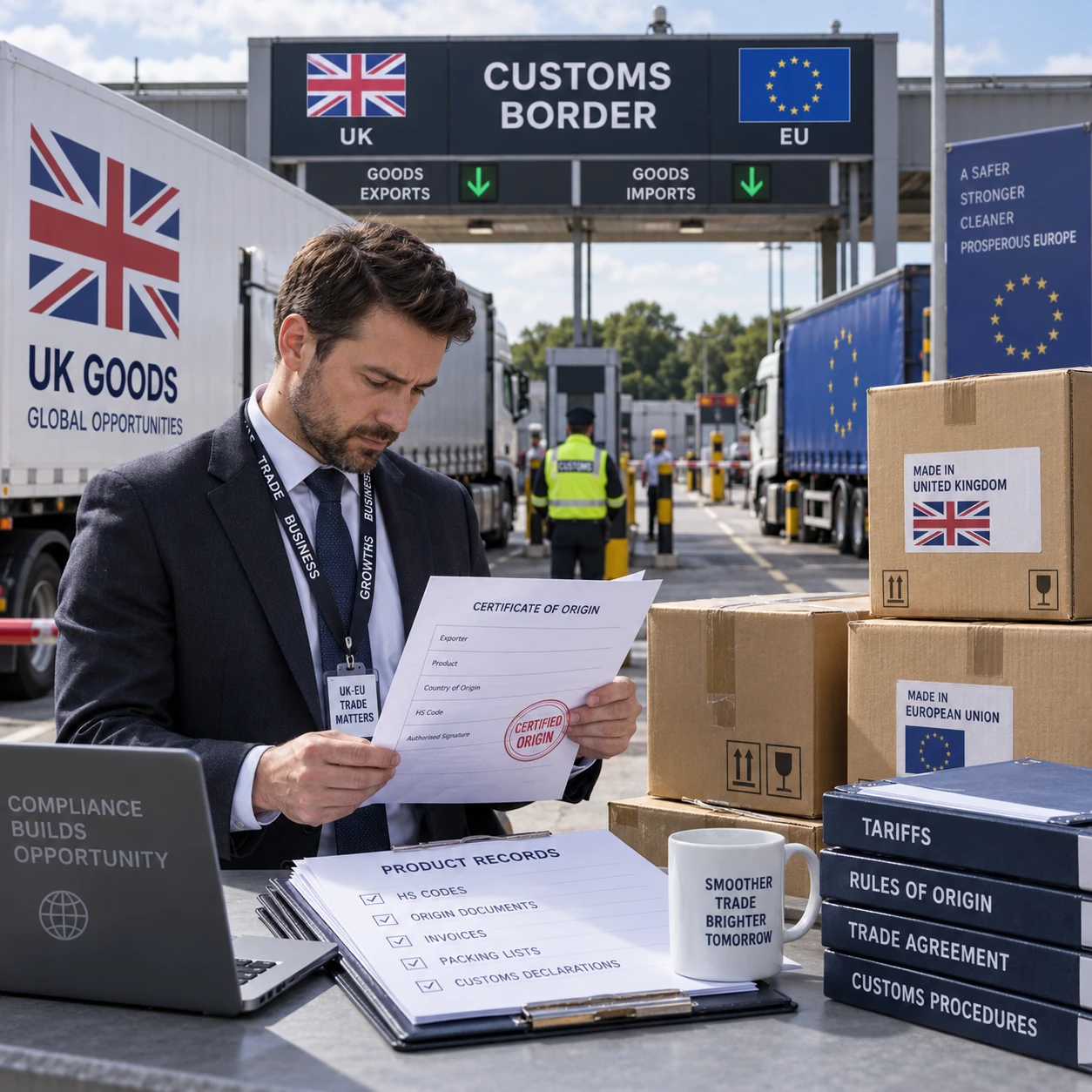
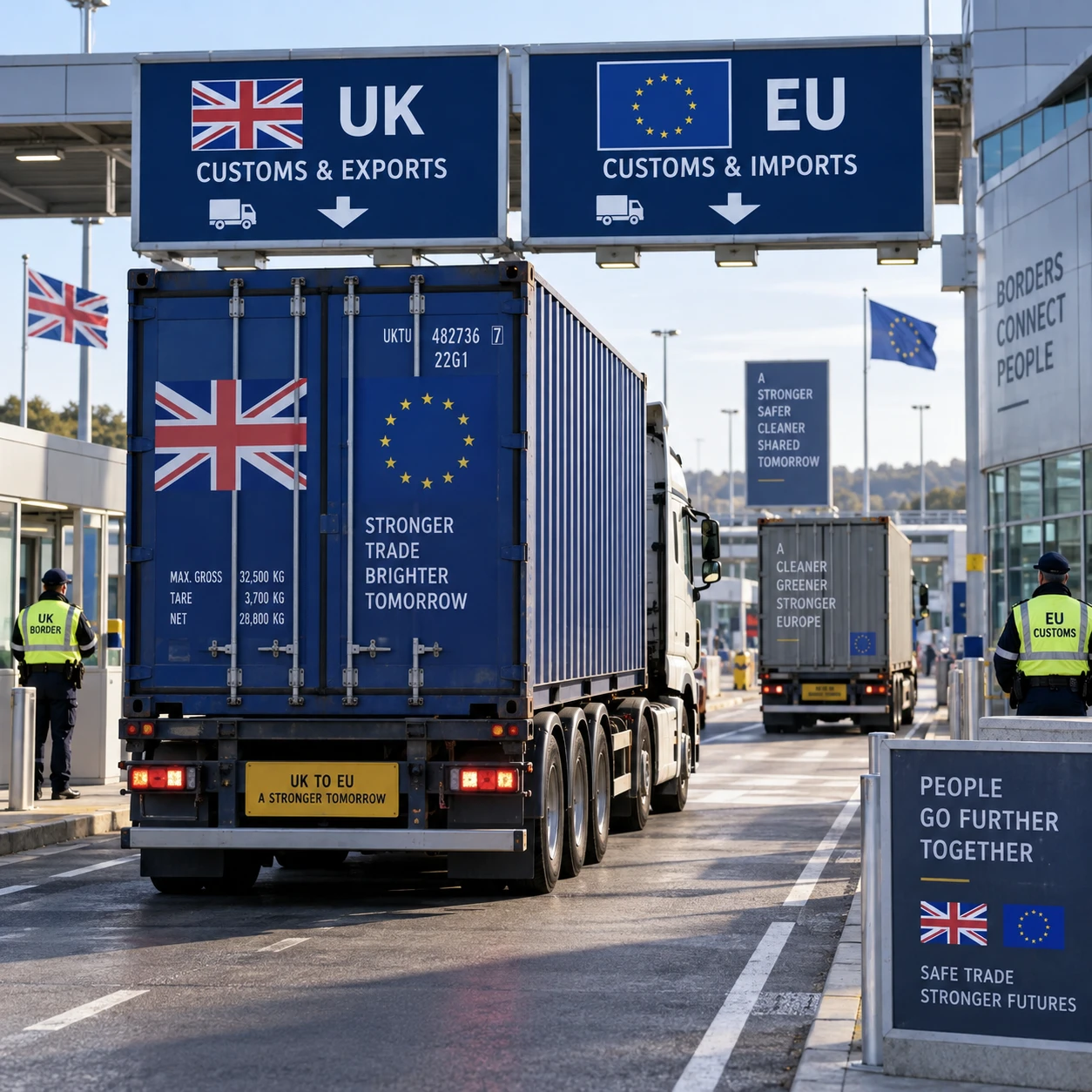
Goods moving between the UK and European Union may qualify for zero tariffs under the UK–EU Trade and Cooperation Agreement (TCA), but the benefit is not automatic. A business must show that its goods meet the relevant rules of origin and make a valid preferential tariff claim.
The key distinction is simple: where goods are shipped from does not necessarily determine where they originate. Checking the product rule and keeping evidence before export can help prevent unexpected customs duties and delays.
What rules of origin mean for UK–EU trade
Rules of origin determine the economic nationality of a product for customs purposes and whether it qualifies for preferential tariffs under the UK–EU TCA. They are different from the country of dispatch, which is where goods are sent from.
For example, a product made in a third country and stored or repacked in Britain does not become UK-originating simply because it is shipped to an EU customer from a UK warehouse. The same principle applies in reverse: dispatching goods from the EU does not, by itself, make them EU-originating.
When a product meets the TCA’s origin requirements, the importer may claim the agreement’s preferential tariff treatment, which can mean a zero customs duty rate. The importer normally makes the claim to customs, while the exporter provides the origin information needed to support it. If the goods do not qualify, the importing country’s standard tariff may apply.
Preferential origin is therefore a test under a trade agreement, not a general label for a product’s identity or shipping route. Zero tariffs also do not remove other border requirements, such as import VAT, customs declarations, product regulations or excise duties where relevant.
Which goods can qualify for zero tariffs?
UK–EU goods can qualify for zero tariffs if they are wholly obtained in the UK or EU, or if they meet the product-specific rule set out in the TCA. The applicable test varies by product, so businesses should not assume that one rule covers every type of good.
Wholly obtained goods are products obtained entirely in one party, with no non-originating materials. Common examples include crops harvested there, animals born and raised there, and minerals extracted there. The agreement defines the relevant categories, so a business should confirm that its product fits the exact definition rather than relying on a broad description such as “made in Britain.”
Many manufactured goods contain materials from outside the UK and EU. They may still qualify if production meets the relevant product-specific rule. Depending on the product, that rule may require a change in tariff classification, set a limit on the value or weight of non-originating materials, or require a particular manufacturing process.
For instance, assembling imported components into a finished item may be enough for one product rule but insufficient for another. Simple operations such as packaging or labelling generally cannot be treated as substantial production just because they take place in the UK or EU. The rule for the product’s classification decides.
How to check a product’s origin rule
To check a product’s origin rule, identify its customs classification, find the corresponding TCA product-specific rule, and compare that rule with the product’s materials and manufacturing process. Classification comes first because the applicable requirement depends on the product code.
A practical check follows this sequence:
- Describe the product precisely. Record what it is, what it does, its materials and how it is made. Similar-looking products can fall under different customs headings.
- Confirm the commodity code. Use the UK trade tariff or the importing party’s tariff tool as appropriate. If a product is difficult to classify, get specialist support before relying on a code.
- Locate the TCA rule for that code. Read the product-specific rule and any notes that define terms, exceptions or calculations.
- Test the production facts. List each material’s origin, value or weight where required, and the operations performed in the UK or EU. Then apply the precise test in the rule.
- Keep the working behind the conclusion. Save the code, rule version, supplier information, calculations and production records used to reach the decision.
The UK government’s guidance on checking rules of origin explains how businesses can assess whether goods meet the requirements. A tariff code is not an origin decision on its own; the code identifies which origin test to apply.
Processing, materials and cumulation
Production steps, non-originating materials and permitted cumulation can all affect whether goods meet the TCA origin rule. The result depends on the product-specific test and the evidence available for each material and operation.
Sufficient processing means that production has met the level required by the applicable rule. It does not mean that any work performed in the UK or EU is enough. A manufacturer should map the actual process, from incoming materials to finished goods, and test it against the rule’s wording. If the rule requires a tariff-heading change, for example, the business must check the classification of the inputs as well as the finished product.
Non-originating materials are inputs that do not have UK or EU preferential origin under the agreement. Their presence does not automatically disqualify a finished product. A value-based rule may allow them up to a specified share, while another rule may require a particular transformation. Keep invoices, bills of materials and supplier origin information so the calculation can be reproduced.
Cumulation allows qualifying UK and EU materials to be treated in a way that supports origin when used in production in the other party, subject to the TCA’s conditions. It can help integrated supply chains, but it is not a blanket rule for all inputs or third-country materials. Check the agreement’s requirements and retain evidence showing the origin of the materials being counted.
What proof and records are needed?
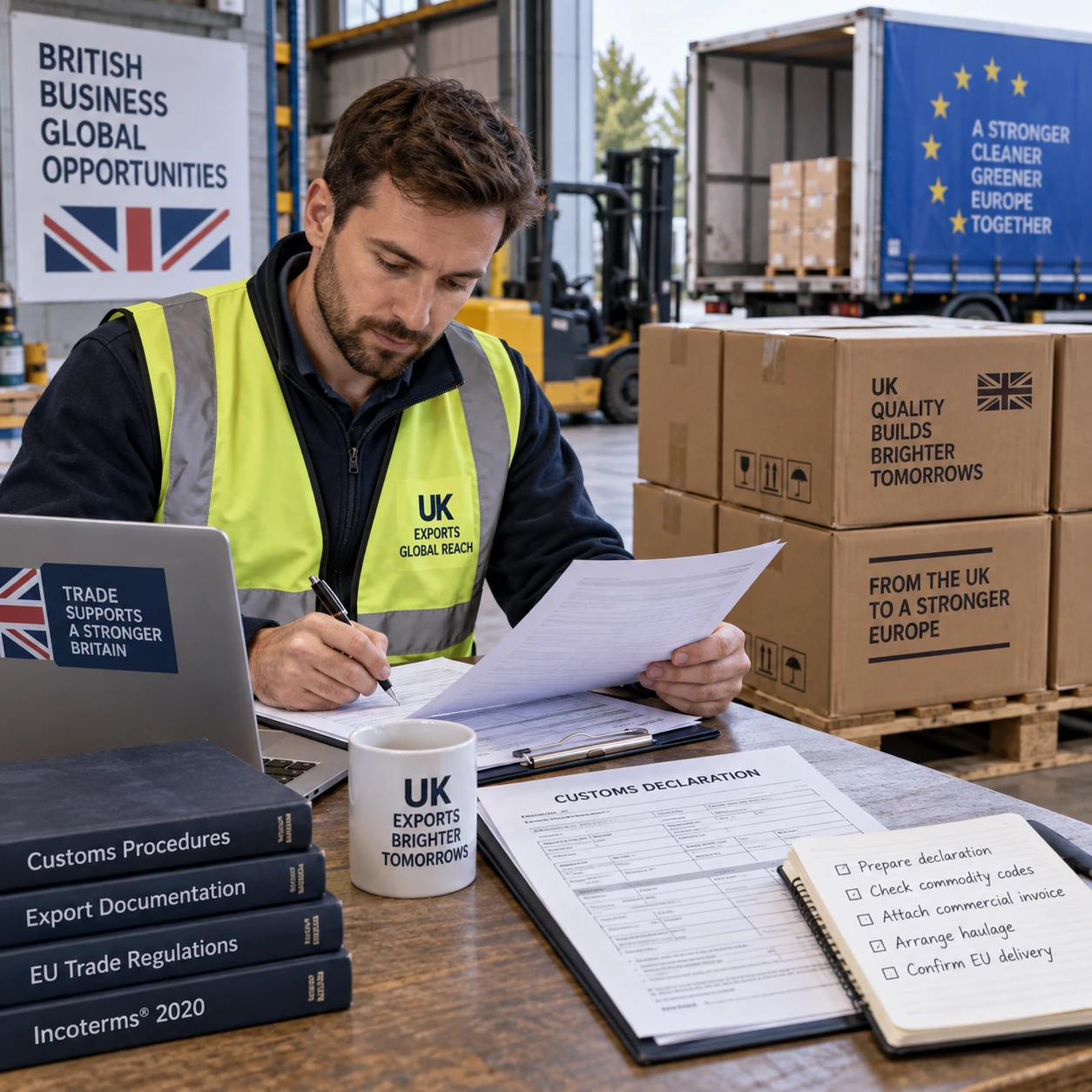
To claim preferential tariffs under the TCA, the importer generally needs a valid statement on origin from the exporter or must rely on importer’s knowledge where permitted. Exporters should keep records that support the claim, including supplier information and the production facts used to establish origin.
A statement on origin is a prescribed declaration on an invoice or another commercial document that identifies the originating goods. It is not simply a country-of-origin label or a general statement that a product was made in the UK. The exporter must have a sound basis for making it and include the information required by the agreement. Check current official guidance for the exact wording and conditions that apply.
A supplier’s declaration can help an exporter establish the origin of materials or products supplied by another business. It supports the exporter’s assessment; it does not automatically prove that the finished product qualifies. Ask suppliers for clear, current declarations and link them to the relevant materials, product codes and supply periods.
Maintain a file with the product classification, applicable rule, bill of materials, supplier declarations, purchase records, production descriptions and origin calculations. Keep records for the period required by the relevant customs rules, and make sure staff can connect the declaration to the shipment it covers. The European Commission’s overview of preferential origin provides further background on origin evidence and claims.
Common mistakes and a practical compliance checklist
The most reliable way to avoid an incorrect zero-tariff claim is to check each product against its own rule, verify the supporting evidence and confirm that the importer makes a valid claim. A brief documented review before shipping is safer than assuming a previous product decision applies to everything.
- Mistake: treating dispatch as origin. Businesses may assume that goods shipped from the UK are UK-originating. Storage, resale or repacking alone usually does not establish origin. Check where the goods were produced and which rule applies.
- Mistake: assuming all imported inputs disqualify a product. This can lead to missed tariff benefits. Some product-specific rules allow non-originating materials if the required transformation or value limit is met. Calculate the test rather than guessing.
- Mistake: treating supplier paperwork as proof of the finished product. A supplier’s declaration covers the supplied goods or materials within its scope. Match it to the inputs used and separately test the finished product against its rule.
- Mistake: issuing a statement on origin before checking the evidence. An unsupported claim can leave the importer facing duties and may create compliance exposure for the exporter. Confirm the rule, documents and shipment details first.
Before claiming preferential treatment, use this short checklist:
- Is the commodity code accurate and current?
- Have you checked the exact TCA product-specific rule for that code?
- Can you document the origin of materials and the production carried out?
- Have you applied cumulation only where the agreement permits it?
- Does the shipment have the required origin proof, and will the importer make a valid claim?
- Have you checked for other import charges and regulatory requirements?
Zero tariffs depend on meeting the origin requirements and making a valid claim; they are not guaranteed by a UK or EU dispatch address.
Frequently asked questions
These answers cover common questions about UK–EU preferential origin, imported materials and charges beyond customs duty.
Does shipping goods from the UK make them UK-originating?
No. The dispatch location does not establish preferential origin. Goods must meet the TCA rule for their product, and the exporter must be able to support the origin claim.
Can goods made with imported materials qualify?
Yes, in some cases. The finished product may qualify if it meets its product-specific rule, which can allow certain non-originating materials or require a defined change in production.
What is a statement on origin?
It is a prescribed declaration made by an exporter on a commercial document to identify goods that meet the agreement’s origin requirements. The exporter must hold supporting information for the claim.
Do zero tariffs mean there are no other import charges?
No. Preferential origin can reduce or eliminate customs duty, but import VAT, excise duty, customs formalities and product-related requirements may still apply.