Understanding the UK-EU Trade and Cooperation Agreement (TCA): Key Provisions for Businesses

The UK-EU Trade and Cooperation Agreement (TCA) sets key terms for trade and cooperation between the United Kingdom and the European Union after Brexit. For businesses, it can allow qualifying goods to move without tariffs, but it does not remove customs formalities or guarantee the same market access as EU membership.
Understanding that distinction is central to planning costs and delivery times. The agreement’s practical effect depends on what you trade, where goods originate, which services you provide, and whether Northern Ireland is involved.
What is the TCA, and what does it cover?
The TCA is the framework governing important parts of the post-Brexit UK-EU relationship, including trade in goods and services, transport, energy, social security coordination, and cooperation in areas such as law enforcement. It sets shared rules and processes, but it does not recreate the UK’s former participation in the EU single market or customs union.
For businesses, the agreement’s most visible provisions concern tariff-free trade in qualifying goods, customs cooperation, services, public procurement, intellectual property, and commitments intended to support fair competition. Separate agreements and domestic laws also shape many day-to-day requirements.
That means the TCA is a starting point, not a complete operating manual. Product safety, labelling, VAT, licensing, data protection, and professional qualifications may be governed by other UK or EU rules. The right question is not simply, “Is this covered by the TCA?” but “Which agreement and regulatory rules apply to this product, service, and destination?”
Goods trade, tariffs, and rules of origin
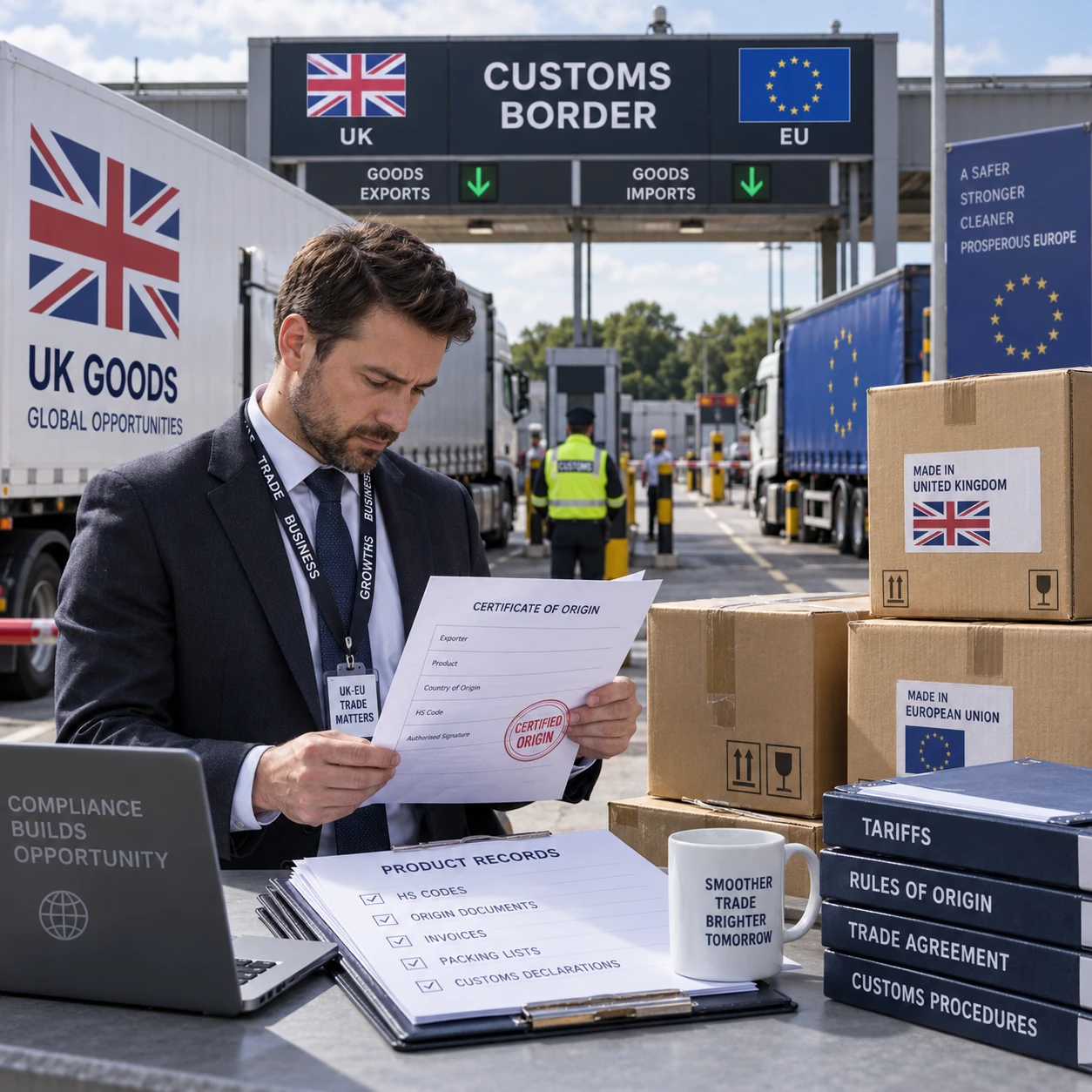
The TCA removes customs duties and quotas on goods that meet its rules of origin, but businesses must still establish origin and comply with customs and regulatory requirements. Tariff-free treatment is conditional; it does not apply automatically to every shipment between the UK and EU.
Rules of origin identify where a product was made or sufficiently transformed. A product shipped from Britain is not necessarily of UK origin: it may contain imported materials or have undergone too little processing to qualify. Each product category has specific origin rules, so a company should check the relevant product-specific rule rather than rely on the shipping address or the location of final packaging.
Businesses claiming preferential tariff treatment need evidence to support the claim. Depending on the circumstances, this may include supplier declarations, production records, bills of materials, or an origin statement on the commercial documentation. Keep records that can substantiate the claim if customs authorities request them.
Even when goods qualify for zero tariffs, customs declarations and import procedures still apply. Import VAT, excise duties, and product-specific controls may also affect the total landed cost. A useful pricing check is to calculate separately the customs duty, taxes, compliance costs, and freight or brokerage charges rather than treating “tariff-free” as “cost-free.”
Customs, paperwork, and border procedures
Businesses trading goods between Great Britain and the EU generally need customs declarations, accurate product classifications, and supporting shipment information. The TCA supports cooperation between customs authorities, but it does not make UK-EU borders free of formalities.
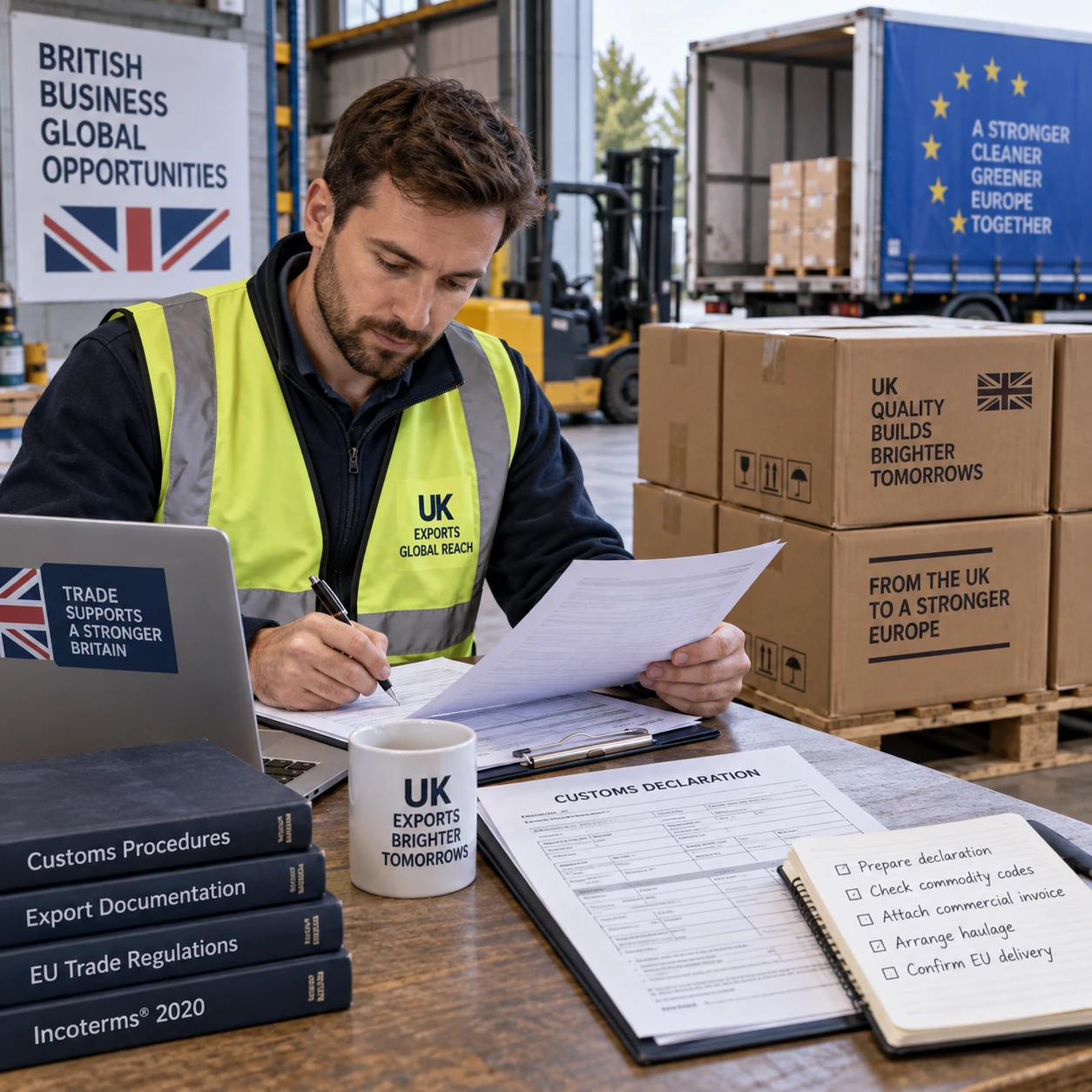
Before a shipment leaves, confirm the commodity code, customs value, country of origin, and the details required by the destination’s import process. Depending on the goods and route, businesses may also need an EORI number, a commercial invoice, transport documents, safety and security filings, or certificates and licences. Missing or inconsistent information can lead to delays, inspections, or extra charges.
Check whether the goods face additional controls. Food, plants, animals, chemicals, medicines, and controlled products can require advance notification, health or phytosanitary certificates, specialist documentation, or entry through designated facilities. Requirements can vary by product and destination and may change over time.
For many small businesses, the practical weak point is not the customs software but the quality of data supplied by customers, suppliers, and freight agents. Assign one person to verify that invoices, commodity codes, origin evidence, and transport instructions match before dispatch. If a customs representative submits declarations, agree in writing who provides information and who corrects errors.
Services, investment, and business mobility
The TCA provides a framework for services trade and investment, but it does not give UK businesses unrestricted access to EU services markets. Access depends on the sector, the activity, the relevant EU member state’s rules, and any professional or licensing requirements.
The agreement includes commitments on services such as business, telecommunications, and some financial services, alongside rules for investment and public procurement. However, it does not preserve the general passporting rights that enabled certain UK financial firms to serve EU clients under the single market framework. Firms should check whether they need an EU-authorised entity, local registration, or permission to provide a specific service.
Business travel is also activity-specific. The TCA contains provisions for certain temporary business visits and work categories, but national immigration rules still matter. A short meeting may be treated differently from delivering a paid service, installing equipment, or working on a client site. Check the destination country’s rules on visas, work permits, permitted activities, and length of stay before travel.
Professional qualifications may not be automatically recognised across the UK and EU. Businesses that rely on architects, engineers, accountants, or other regulated professionals should verify recognition arrangements in the relevant country. Choosing to serve a market remotely may reduce travel needs, but it does not necessarily remove local licensing, consumer, or tax obligations.
Regulation, subsidies, and the level playing field
The TCA includes level playing field commitments intended to prevent unfair competition, including provisions on labour, environmental standards, and subsidies. These commitments matter because changes in certain policy areas can affect how the UK and EU manage their trade relationship.
The agreement does not create identical rules on every product or require the UK and EU to maintain the same regulatory system. Businesses must still comply with the rules in each market where they sell. For example, a product that meets UK requirements may need separate conformity assessment, labelling, or documentation to enter the EU, depending on the product and applicable legislation.
Subsidy rules are another area to monitor, particularly for companies receiving public support or competing for government contracts. The TCA establishes obligations and cooperation mechanisms, while domestic regimes determine many practical details. Keep records of relevant public funding and seek specialist advice if a grant, tax measure, or other support could affect cross-border activity.
In practice, compliance teams should track regulatory changes in both jurisdictions rather than assume that standards will remain aligned. The trade-off is straightforward: selling in both markets can broaden customer reach, but it may require separate compliance checks and evidence.
Northern Ireland and dispute resolution
Northern Ireland has distinct arrangements for goods movements, so businesses should not treat its trade procedures as identical to those for Great Britain. The TCA covers the wider UK-EU relationship, while separate UK-EU arrangements govern important aspects of Northern Ireland’s position.
Businesses moving goods between Great Britain and Northern Ireland, or trading onward to Ireland and the EU, should check the current requirements for their specific route and goods. Procedures can depend on whether goods are considered at risk of entering the EU, the type of product, and the arrangements in force at the time. Consult current official guidance before shipping; a rule that applies to a direct Great Britain-to-EU export may not answer what is required for a Northern Ireland movement.
The TCA also provides channels for handling disagreements. Depending on the issue, parties may use consultation, specialised committees, or formal dispute settlement, with possible remedies if obligations are not met. These state-to-state mechanisms are not a substitute for resolving a routine commercial dispute between a buyer and seller. Businesses should use clear contract terms on delivery, customs responsibilities, product compliance, and what happens if a shipment is delayed or rejected.
Practical steps for businesses
Businesses can prepare for the TCA by checking each product, route, and service against current customs, origin, regulatory, and market-access requirements. A short review can reveal costs and documentation gaps before they disrupt a shipment or client project.
- Map your trade flows: List products, suppliers, destinations, transport routes, and any movements involving Northern Ireland.
- Verify origin: Apply the relevant product-specific rule and retain supplier declarations and production evidence before claiming a tariff preference.
- Review customs data: Confirm commodity codes, customs values, EORI details, invoices, declarations, and responsibilities with your customs agent.
- Check additional controls: Identify licences, certificates, safety filings, VAT or excise obligations, and product-specific regulatory requirements.
- Assess services and travel: Confirm local authorisation, professional recognition, immigration permissions, and any establishment requirements in the destination market.
- Set a review routine: Assign an owner to check official UK and EU guidance when products, suppliers, routes, or regulations change.
The TCA can reduce tariffs for qualifying goods and provide a stable framework for parts of UK-EU trade. It does not remove the need to prove origin, complete customs procedures, or meet the separate rules that govern services and regulated products. Verify current obligations for each product, activity, and destination before relying on a preference or planning a shipment.